Reflections on building a career that aligns with purpose, not just income
My journey starting a career in a field that yet didn’t exist to becoming one of the leading experts in sustainable web design in Scandinavia.

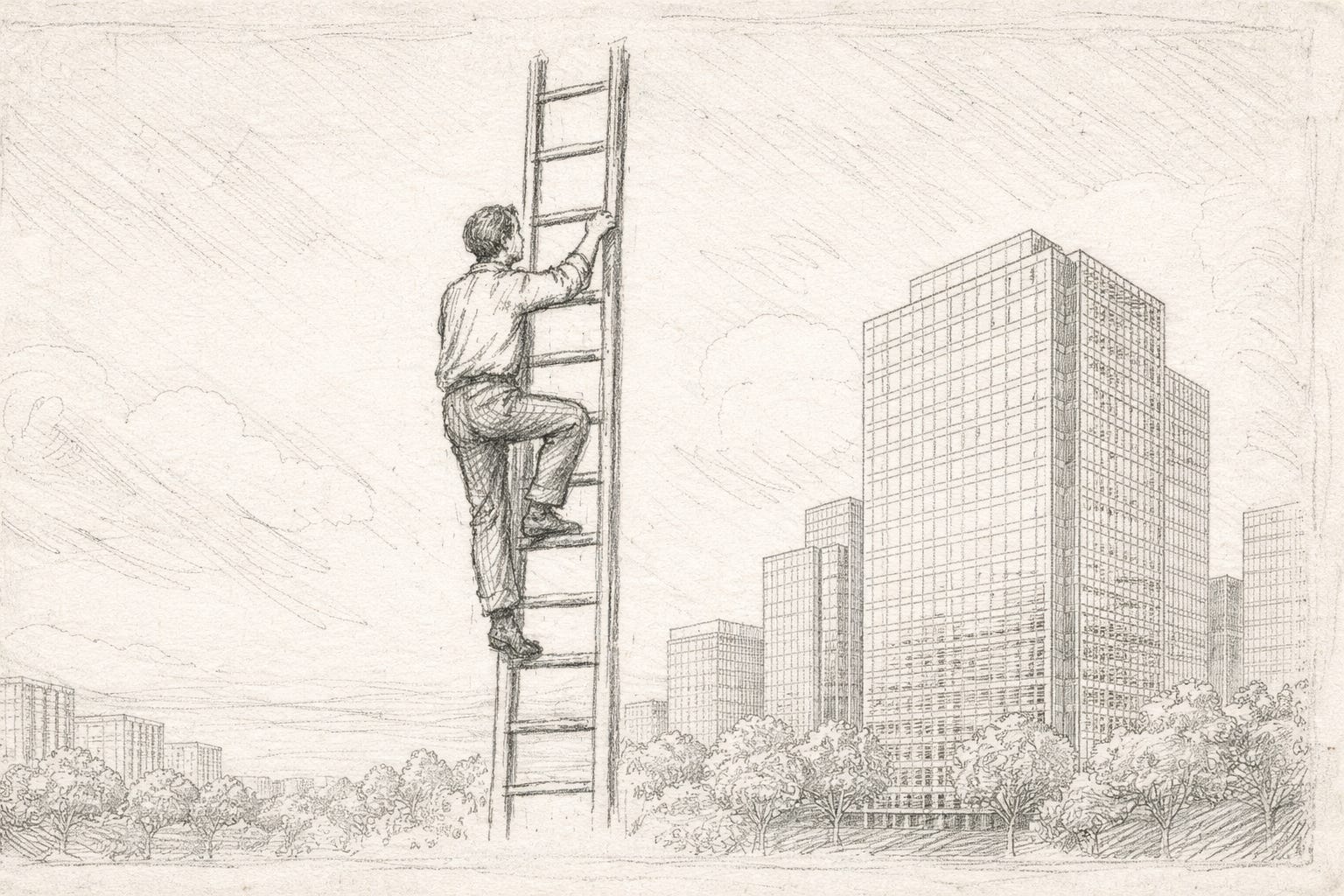
I sat down one day, and I think it was a Sunday, to think about something that had been sitting quietly in the back of my mind for a long time. I have always loved nature. Being outside, breathing fresh air, walking through the forest with no particular destination. But I have also always loved technology. Since I was very young I have been designing websites for friends and family, starting all the way back in Microsoft Frontpage where I would draw tables visually on the screen and somehow turn them into something that resembled a website. Those two interests, nature and technology, had always lived separately in my life. I never really thought about how they might connect, because they seemed so far apart.
But that Sunday, or whenever it was, I started pulling at that thread. What if there was a place where my love for nature and my passion for the web could actually meet? I did not have an answer right away. It was more of a question that wouldn’t leave me alone, the kind that follows you around during the day and shows up again when you are trying to fall asleep.
It was during that period I came across a book that changed the way I saw the internet. It showed me how much energy the web actually consumes, how much pollution sits behind every page load, every image, every bloated website that takes five seconds to appear on someone’s screen. I had always assumed the internet was clean. That it was the better alternative. That moving things to the cloud was inherently a step in the right direction. But that was not the full picture. The cloud is not some magical place where files become sustainable the moment you upload them. It is a network of massive data centers, and they consume enormous amounts of energy.
That realization connected the dots for me. It did not arrive as a dramatic moment or some kind of awakening. It was more like something slowly becoming visible, the way you start noticing a sound that has always been there once someone points it out. I realized that the entire industry was on a track where everything kept getting heavier and heavier instead of lighter and faster. And I realized that if I wanted my career to mean something beyond a paycheck, then this was where I needed to be. Not just building websites, but building them in a way that respected the world my kids would grow up in.
That became my purpose. Not in some grand, philosophical sense, but in a very practical one. I wanted to help make the internet a sustainable part of our future.
When your values do not fit the room
The thing about having values that matter deeply to you is that they do not always fit neatly into the rooms you find yourself in. When you run a company, and especially when that company builds websites for other people, you quickly learn that your values are not automatically shared by the person sitting on the other side of the table. And unless your entire business is built around sustainability as the main selling point, there is a limit to how far you can push it before the customer starts to lose interest or feel like they are paying for something they did not ask for.
I had to find the combination. I could not walk into every meeting and talk about carbon emissions and energy consumption and expect the client to follow me there. That was not their world. They had a business to run, customers to reach, and a budget to keep. So instead of always trying to create the most sustainable website in the absolute sense, I started focusing on creating the most sustainable version of the customer’s product. That distinction might sound small, but it changed everything for how I approached my work.
I have been fortunate with my employers over the years, because they never shut down an idea before hearing it out. But they did help me understand something important, which was that I often had to rephrase what I was trying to say into a language the client could actually connect with. Not because the client was wrong for not caring about sustainability in the way I did, but because the words I was using did not land. They did not create the kind of understanding that leads to action.
And still, even with all that reframing, my values never quite fitted perfectly into any room I was in. There were clients who simply did not want to spend money on optimization. They wanted features, and they wanted them fast, and they wanted to pay as little as possible for everything else. There were projects where the deadline was so tight that quality had to take a backseat, and where the shortcuts we made were the exact opposite of what I believed in. There were days filled with stress about shipping quickly, about keeping up, about doing things in ways I knew could be done better if there was just a little more time.
That friction is not something that goes away. It is something you learn to carry.
The years no one paid me for
When I saw the need clearly enough, I created a non-profit organization devoted to spreading the word about sustainable web design and its practices. I did not wait until I had a business plan or a monetization strategy. I just started, because the urgency felt bigger than the uncertainty.
I began writing. Article after article, day after day, for about six months. I wrote about what I was learning, about the practices I was discovering, about the things I thought other developers needed to hear. After that stretch of writing, I was invited as a guest on the Green IO podcast to talk about the topic, and that felt like a confirmation that the message was reaching beyond my own small corner of the internet.
Then I went on to write a three hundred page book called Sustainable Web Design In 20 Lessons, which you can read all the chapters of on my Substack if you are a paid subscriber. I also built a collection of markdown articles that I stored in GitHub, and those articles eventually became part of the GitHub Arctic Vault, a project designed to preserve knowledge for future generations. That part still feels a bit surreal when I think about it, knowing that something I wrote is stored in a vault on Svalbard, meant to outlast most of what we build today.
All of this went on for more than a year. A year with no pay, and only hard work driven by the belief that it mattered. I spent most of my waking hours on it because I was determined to help change something, even if the change was small and even if most people around me did not fully understand why I was doing it.
It took late nights. It took weekends. It took every available hour outside my full time job, and it took careful planning and execution to make it all fit into a life that was already full. It took real passion, but not the kind you see in motivational videos. It was the quiet kind, the kind that keeps you sitting at your desk on a Friday evening when everyone else has moved on to other things.
I was not doing it for me. I was doing it for everyone. I was doing it because I saw a real problem, and because I wanted to leave the world in a slightly better state for my kids and for whatever comes after them. That might sound idealistic, and maybe it is. But it was also the most honest reason I had, and it was enough to carry me through the months where nothing came back.
The hardest part was not the work itself. The hardest part was explaining it. Friends and family would ask me what I was spending all my time on, and when I told them, many of them could not quite understand why I was putting so much into something that was not generating any income. That kind of exhaustion is different from the physical kind. It is the quiet drain of constantly having to justify something that feels deeply right to you but does not yet make sense to the people around you.
Learning to speak a different language
I am sure there is a market out there that focuses specifically on sustainability and is willing to pay for websites that are built to be less polluting. I just have not found them yet in my own country. Starting as one of the first in a space means you do not just have to sell the product. You have to help create the market. And that is a very different kind of challenge.
When I turned sustainable web design into a business that created websites for others, I quickly realized that the language I had been using was not working. Talking to people about green websites, about reducing emissions, about making the internet more sustainable, those conversations often ended with polite nods and not much else. The intention was understood, but the value was not felt. Not because people did not care, but because the words did not connect to the problems they were already trying to solve.
So I started listening more carefully. I let potential customers tell me what they struggled with, what they needed, what kept them up at night when it came to their online presence. And slowly I began to understand that the language of sustainability, as I had been using it, was speaking to a concern most of them did not yet have. But the outcomes of sustainability, those were things they already wanted.
Instead of framing it as green, sustainable, better for the environment, and less polluting, I reframed it as websites that are cheaper in hosting costs, that load much faster, that potentially deliver better SEO results, that have better accessibility and WCAG compliance, and that are much more secure. These were problems almost every website owner already had, and by translating the concept into something they could immediately understand and feel the value of, it helped open a market for sustainable web design outside of those who were already aware of the environmental side.
I did not abandon my values in the process. I just found a bridge between what I believed in and what the people I was trying to reach actually needed to hear. And that bridge made all the difference.
What it looks like on the other side
The late nights I put in, the weekends I spent writing and building and learning, all the voluntary work that no one asked me to do, it has finally started to pay off. Not in the way most people imagine when they hear that phrase. It did not make me a millionaire, and that was never the end goal.
What it did was something different, something that I think matters more in the long run. I am today seen as one of the leading experts in sustainable web design in Scandinavia. People come to me with questions and requests. I am asked to speak at events and do webinars to teach companies and organizations about how they can approach sustainability in their digital products. The knowledge I spent years building in silence, for free, is now something others actively seek out.
The goal was never to own a beach house in the tropics and work four hours per week. The goal was to be heard. To create a light at the end of the tunnel for an industry that was moving fast but not always in the right direction. And to pave the way, even just a little, for a new way of thinking about how we create digital products.
It was not easy building a career out of something that did not really exist yet, and something that people would sometimes dismiss or frame as overly idealistic. But it was possible. It took patience, it took stubbornness, and it took a willingness to keep going long after most people would have moved on to something more immediately rewarding.
And I want to be honest about this. The tension has not disappeared. Being on the other side does not mean everything suddenly aligns. There are still projects where speed wins over quality, still conversations where the budget does not allow for the kind of optimization I would want, still days where the gap between my values and the reality of the work feels wider than I would like. But the difference is that I have earned a place where those values are respected more often than they are ignored. And that took years to build.
A quiet word to the one who is still early in it
If you are reading this and you are sitting where I once sat, somewhere early in a journey that feels important to you but that the industry does not yet make room for, then I want to say something to you. Whether your thing is sustainability, or accessibility, or ethical design, or something else entirely that you believe the web and the world needs more of, the road ahead is not going to be quick, and it is not going to be easy.
There will be long stretches where no one pays you for what you are building. There will be conversations where people nod politely and then move on. There will be moments where you question whether the time and energy you are putting in will ever lead anywhere. And I cannot promise you that it will, because every path is different and every market has its own pace.
But what I can tell you is that the years I spent working for free, writing and learning and building something that no one asked me to build, those years were not wasted. They were the foundation. Everything I have today, the expertise, the recognition, the ability to actually make a difference in my field, all of it was built during those quiet years when it looked like nothing was happening.
If something matters to you, do not wait for the market to catch up before you start. Do not wait for permission from your employer or validation from your peers. Start learning. Start writing. Start building. And be patient with the fact that the world might not understand what you are doing for a while.
The thing I wish someone had told me back then is that building a career around purpose is not a straight line. It is a long, winding process where you sometimes feel like you are standing still while everyone else is moving forward. But you are not standing still. You are laying the groundwork for something that has not fully taken shape yet.
I am still on that road myself. I am currently working on a new book called The Slow Developer, which is about how we can make our workday in tech more sustainable, not just in an environmental sense, but in a human one. It is the next step on a path that started with a quiet question on a Sunday afternoon and has slowly grown into something I could not have imagined back then.
And if you are at the beginning of your own version of this, know that the beginning is supposed to feel like this. Uncertain, slow, and a little lonely. That does not mean it is wrong. It might just mean you are early.